Color Tablets
Published on: May 08, 2026
Montessori and the Wonderful World of Color
Color Tablets
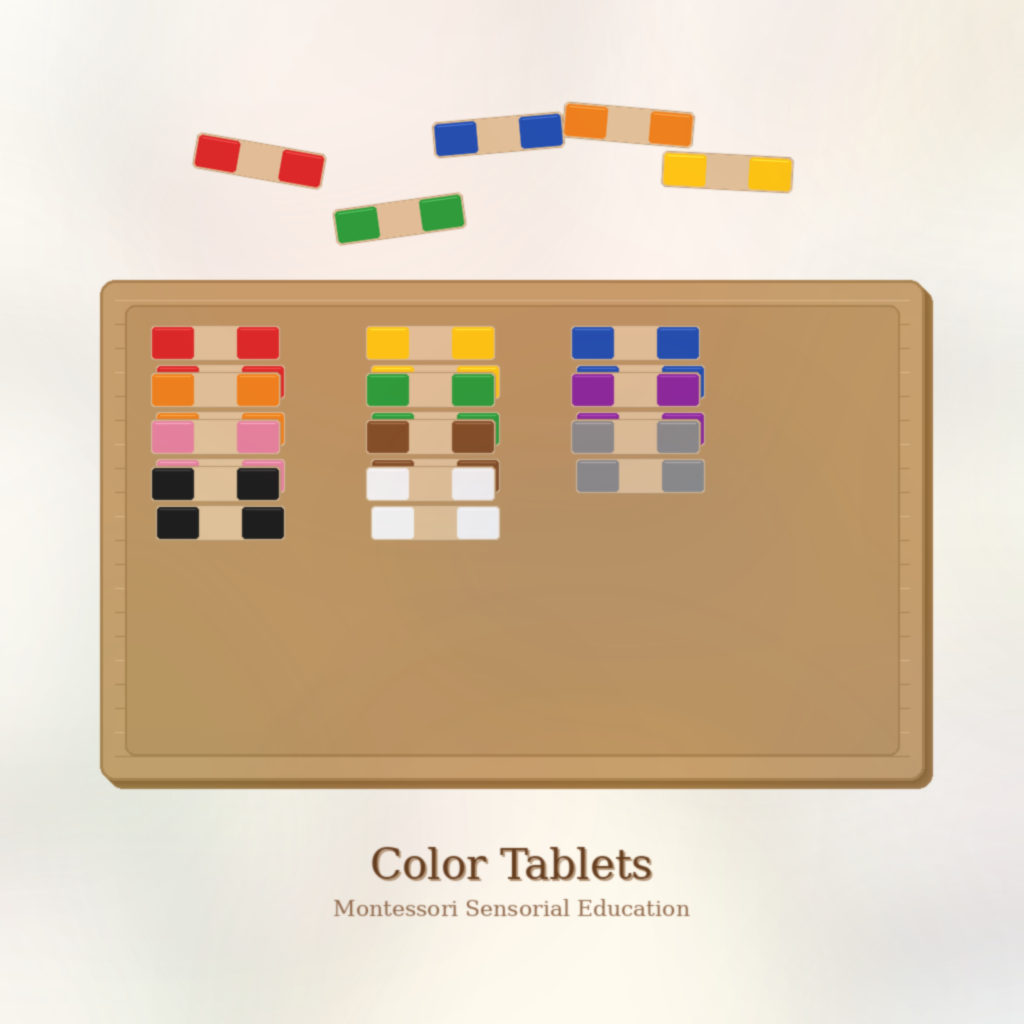
Montessori color tablets sharpen visual acuity. Children begin to understand the color spectrum with these wonderful lessons. Color discrimination helps with later learning, such as using logic, classification of similar and different objects, groupings and patterns of color in nature. This exercise helps develop visual language skills — skills that are used in reading and math.
Montessori first used colored silk thread tablets instead of our modern painted ones. My first directress attended one of the first Montessori preschools in Holland and experienced the thread tablets first hand. She explained that the way we present the painted color tablets — holding them on the side and not touching the colored part — was because the colored silk thread would soil from fingerprints. She remembered how beautiful the thread spools were; the colors were vivid and very distinct. These silk thread tablets were inviting to use, and much easier to match and grade than our modern painted ones.
I do own the modern color tablets and they usually work well. But I have found that some of the colors look too similar. Sometimes, less than perfect shades of color make the task confusing for some children to grade and match the colors.
The teachers even had difficulty grading the magenta and red colors. Some of these colors are so similar that it can be frustrating to figure out the correct color group. Also, the painted tablets are so shiny that the glare from the light makes the colors less distinct.
I found that by purchasing colored spools of thread, I can do the same exercises with better color selections. Many students found the spools of thread much easier to match. Also, it makes sense to hold the spools carefully so that you don't touch the thread.
You can use thread, yarn, ribbon, or any type of thin thread material. Make your own tablets from cardboard, balsa wood strips, wooden shapes, or wooden cubes you can buy from any craft department or store.
Evenly wind the thread onto the boards or cubes to make your own color boxes.
Provide two of each primary color spool for matching. The secondary colors are used for both matching and shading, so make sure to have enough colors to classify from light to dark.
Some Good Links for Color
- The history of color names makes a wonderful key lesson for the Story of Writing.
- The website World Wide Words has a fascinating article about the history of color names — a great research topic for older children.
- Crayola's website includes a chronology of crayon color names. Changes in society and history have had an impact on the names of crayons through the eras.
- Elizabethan color names reflect their Shakespearean culture and society — researching these historical color terms is a wonderful enrichment activity.
- The Story of Colors is a great book to check out at your local library. It's very Montessori with its history of color.
- For your daughter who loves style and fashion, Color Me Beautiful explains warm and cool colors for the best fashion look.
There is such a joy about colors. Color plays such a large part in our lives. Just watching a sunset can be awe-inspiring.
There are so many ways to appreciate color. Art is a great creative way to use color. Crayons, colored paper, markers, paint, colored pencils, and chalk are some mediums to introduce to your children.
As seasons change, observe the different colors of trees, flowers, grass, and grains. Talk about your favorite color with your children. When your children get dressed in the morning, talk about what colors they are wearing. Color is everywhere we look.
Sorting and matching colors makes an interesting and happy learning experience for children. After doing this lesson, our children appreciated painting and mixing different secondary colors using primary colors of tempera paint. A love and interest in art was a wonderful by-product of using the color tablets.
Materials
If you'd like to use the traditional Montessori color tablets, here are some quality options:
- Adena Montessori Color Tablets (1st Box) — a nice set for primary color matching at home
- MONTESSORI OUTLET Color Tablets (1st Box) — a quality classroom-grade set
These are part of the Montessori sensorial curriculum and are typically introduced around age 2½ to 3.
Free Printables & Resources
- Free Color Nomenclature Cards (English) — print, cut, and laminate for matching and vocabulary work
- Color Nomenclature Cards (Spanish) — perfect for bilingual classrooms
- Color Word List — a handy reference for color vocabulary
- Color Nomenclature Cards — more information about using these cards
- Lesson of the Day 1 — fun activities for preschool color skills
More on Color Tablets
- Lesson of the Day 96: Color Tablets — Montessori Visual Discrimination of Color with Boxes 1, 2, and 3
- Lesson of the Day 53: Color Tablets -- Montessori Sensorial Color Exploration
- Lesson of the Day 26: The Colored Tablets
- Colored Tablets
- Colored Tablets: Montessori's Wonderful World of Color