Continental Drift and Plate Tectonics
Published on: April 26, 2026
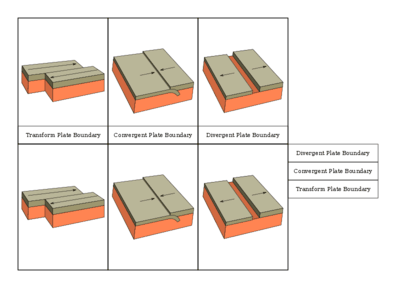
Plate Tectonics and Continental Drift
Recommended Materials
- Pangaea Puzzle Kit — hands-on continental drift activity
- Montessori Continent Map Puzzle — handmade wooden puzzle showing the continents
Continental Drift
The crust of the earth isn’t one solid piece — it’s made of various plates. Land plates are called continental plates. Other plates are under the oceans; these are called oceanic plates.
These plates move very slowly over the surface of the earth. Over millions of years, the continents have shifted dramatically. About 250 million years ago, all the land on Earth was joined together in one supercontinent called Pangaea (meaning “all lands”). Pangaea slowly broke apart, and the pieces drifted to where they are today.
Evidence for Continental Drift
How do scientists know the continents were once joined? Several clues point to this remarkable history:
- Puzzle-piece fit: The coastlines of South America and Africa fit together like puzzle pieces.
- Matching fossils: The same types of ancient plant and animal fossils are found on continents that are now separated by vast oceans.
- Rock patterns: Mountain ranges and rock formations on different continents match up when you push them together.
- Climate clues: Tropical plant fossils have been found in Antarctica, showing it was once in a warmer location.
What Drives the Plates?
Deep beneath the Earth’s crust, the mantle is partly molten rock that flows very slowly. This movement creates convection currents that push and pull the plates above. Where plates meet, we see earthquakes, volcanoes, and mountain building.
Types of Plate Boundaries
- Divergent boundaries: Plates move apart, and new crust forms from magma rising up (like the Mid-Atlantic Ridge).
- Convergent boundaries: Plates push together, causing one to slide under the other (subduction). This creates deep trenches and volcanic mountain chains.
- Transform boundaries: Plates slide past each other, causing earthquakes (like the San Andreas Fault).
Continental Drift Timeline
This makes a wonderful timeline activity for your Montessori classroom or homeschool:
- 250 million years ago: Pangaea — one supercontinent
- 200 million years ago: Pangaea begins to split into Laurasia (north) and Gondwana (south)
- 150 million years ago: The Atlantic Ocean begins to form
- 65 million years ago: India separates from Africa and begins its journey toward Asia
- Today: The continents continue to move about 2–5 centimeters per year
Montessori Presentation Ideas
Continental drift is part of the Second Great Lesson in the Montessori elementary curriculum — the Coming of Life. Here are ways to present it:
- Use a Pangaea puzzle to show how continents fit together
- Cut continent shapes from felt or foam and rearrange them on a blue background
- Create a timeline showing how the continents moved over millions of years
- Use the geology printouts alongside this lesson
Free Printout
Download our free Continental Drift Cards printout to use in your classroom or homeschool. The cards show Pangaea and the stages of continental drift with labels for each geological period.
Related Lessons
Explore more earth science on MontessoriMom:
- Layers of the Earth — learn about the core, mantle, and crust
- Earthquakes — what happens when plates move suddenly
- Volcanoes — where magma breaks through the surface
- Volcanoes Free Printout
- Geology Printouts
- Maps of Earth Surface
- Lesson 28: Earth Science — Plate Tectonics, Volcanoes & Earthquakes