Early Practical Life
Published on: June 11, 2012
Toddlers are naturally driven to explore the world with their hands and mouths, making practical life activities one of the most rewarding areas of Montessori learning for this age group. Drawing from my years in the toddler classroom, here are some of my favorite hands-on activities that honor young children's need to touch, taste, and explore while building essential life skills.
Understanding Young Toddlers in the Classroom
My experience in the toddler classroom was probably the most difficult class to provide activities to keep the students happy and busy. The children ranged in age from 17 months to three years old. Developmentally, there is a big difference in this age group. Older toddlers usually have good verbal ability and improving small and large motor skills, whereas many young toddlers still use their hands and mouths for learning and exploring and have difficulty expressing themselves.
Because younger toddlers need extra supervision with difficult tasks, it's best to keep their activities simple and safe. They also need a good variety of activities to do.
Dry Materials and Water Play Activities
Start with easy "sand" and water play activities using large containers on a table. Instead of sand, use small pasta, cornmeal, or oatmeal. Provide containers and shovels. Young toddlers need freedom to mess around with materials, but still enforce basic rules, such as not throwing materials and cleaning up. Sometimes this becomes a small group activity, which is fabulous for language and social skills. Just keep the number to a maximum — I found 4 children at the sand table usually worked well.
Children this age need to learn to share, talk to each other, and cooperate, even though they tend to be self-centered and play side by side. You can provide different areas with containers of dry materials — one with cornmeal, one with pasta, one with rice meal, and one with oatmeal. This way more kids can do this activity. Later, they will move on to more controlled movements and structure with other practical life lessons.
You can use flour as a more advanced "sand play" by providing a small flour sifter, scoops, cups, bowls, and plastic knives for leveling off cups.
Water play can include washing a plastic baby doll, dinosaurs, plastic dishes, and more. Provide just a small jug of water, a wash basin, towel, small toothbrushes, sponges, and a smock or rain coat to wear. Show how to wash, dry, and drain the water. You'll have to redo the setup each time with clean water, but it's worth the effort!
Painting with Pudding
Painting with pudding is a popular finger painting project for toddlers. It's hands-on and it's okay if they taste the pudding paint. Tape a shape (square, circle, or rectangle) outline on a washable table for your child's painting area. Put a teaspoon of pudding on the area. Show how to paint with your fingertips within the shape. When finished, take a piece of construction paper and make a print of the finger painting masterpiece. Show your child how to wash their hands.
My babies loved doing this in their high chair tray. Let them smear around the pudding directly on the tray.
Combing and Brushing Hair
I used my niece's hand-me-down Barbie Styling Head for combing and brushing hair. I used a thick regular comb and a small brush — it's easier to use than the small doll comb and brush. Show your child how to start combing the hair, slowly and gently, from the bottom to the top of the head. If you have lots of kids that want to do this, get two styling heads, one with a comb and one with a brush. Don't use the small parts that come with the styling head and make sure everything is safe for your children.
Transferring and Pouring Activities
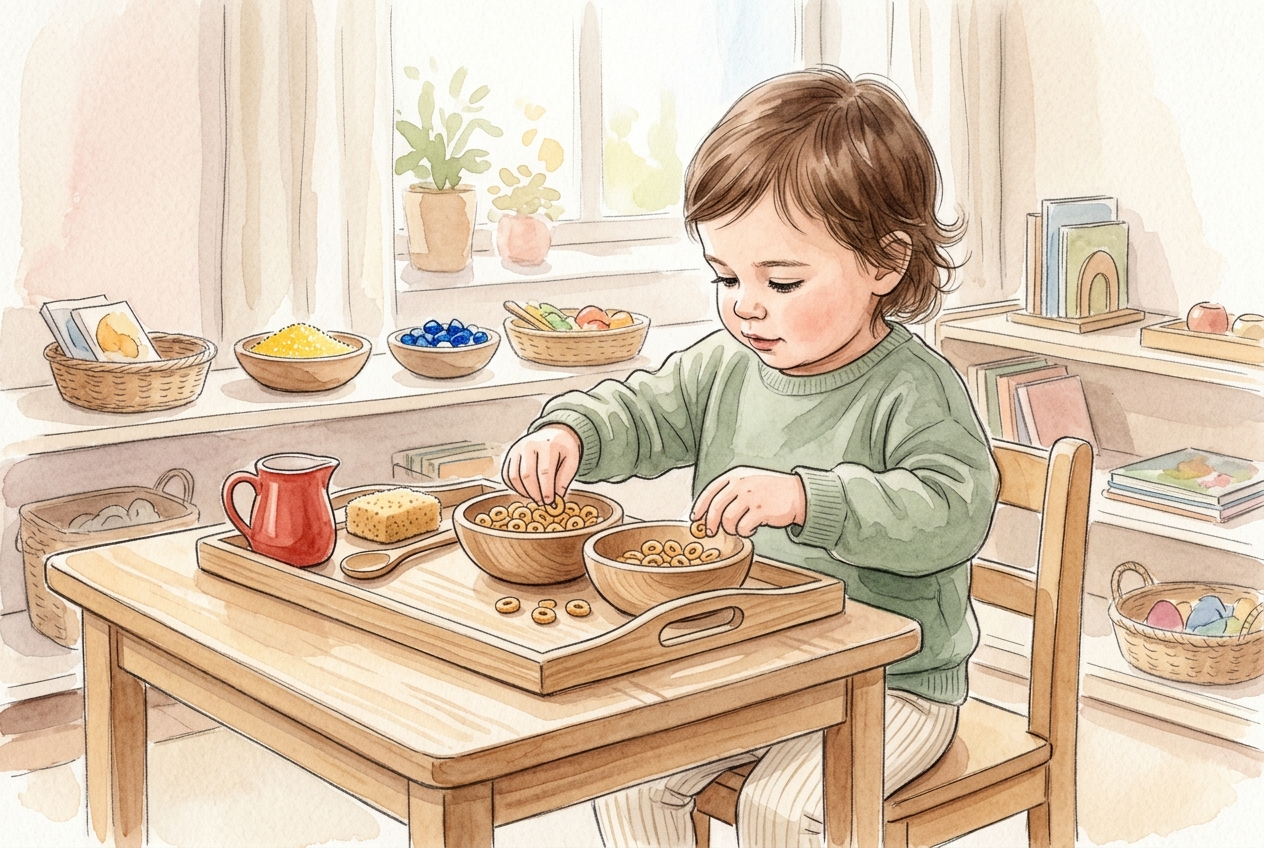
One of the first controlled practical life activities I introduce is dry cereal transfer. Put puffed rice in one wooden bowl and place it on a tray with a second empty wooden bowl. Using your fingertips, transfer the cereal to the empty bowl. Children will often do this activity many times. This is a favorite because very young toddlers love to put things in their mouths and use their hands. Just have extra cereal on hand because they will eat it! A Montessori sensory bin transfer tools set with wooden bowls and scoops works beautifully for these kinds of activities.
When pouring dry ingredients from one pitcher to another for young children, again, I make sure the dry ingredient is a small cereal.
Pouring water from one half-full small pitcher to an empty small pitcher works well. Use a cake pan as an overflow tray — the spills stay put in the pan. Provide a sponge and bucket for clean ups. Child-sized metal pouring pitchers are perfect for little hands learning to pour with control.
Materials You'll Need
- Large containers and shovels for sensory play
- Dry materials: small pasta, cornmeal, oatmeal, rice meal, puffed rice cereal, flour
- Wooden bowls, tongs, and scoops for transfer activities
- Small child-sized pitchers for pouring practice
- Cake pan (for overflow tray), sponges, and a small bucket
- Flour sifter, cups, and plastic knives for advanced dry play
- Pudding, construction paper, and tape for pudding painting
- Wash basin, towel, small toothbrushes, and sponges for water play
- Smock or rain coat for messy activities
- Styling head doll with a thick comb and small brush
- Plastic baby dolls, dinosaurs, or dishes for washing activities
If you don't mind a bit of a mess, practical life skills can give hours of early learning fun for your toddler.