Inner & Outer Planets
Published on: June 17, 2013
Inner & Outer Planets
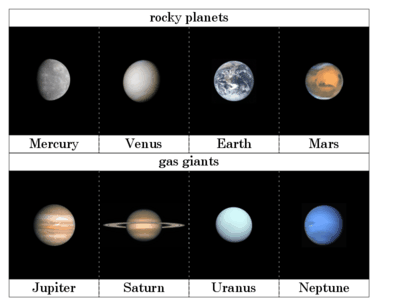
One of the most beautiful things about Montessori education is how naturally children are drawn to the grandeur of the universe. When a child learns that our solar system’s planets fall into two fascinating families — the inner planets and the outer planets — their eyes light up with the same wonder that has driven astronomers for centuries. If you’ve already begun exploring the Solar System with your child, understanding this planetary classification is a wonderful next step in deepening their cosmic knowledge.
What Are the Inner Planets?
The inner planets are the four worlds closest to the Sun: Mercury, Venus, Earth, and Mars. Often called the terrestrial or rocky planets, they share several key characteristics that make them distinct from their distant neighbors. They are relatively small, composed primarily of rock and metal, and have solid surfaces. These planets orbit closer to the Sun, which means their years are shorter — Mercury completes an orbit in just 88 Earth days!
Children are often fascinated to learn that Earth is the largest of the inner planets, and that Mars, our rusty-red neighbor, has the tallest volcano in the entire solar system — Olympus Mons. Venus, despite being called Earth’s twin in size, has a scorching surface temperature hot enough to melt lead. These vivid details capture young imaginations beautifully.
What Are the Outer Planets?
Beyond the asteroid belt lie the four outer planets: Jupiter, Saturn, Uranus, and Neptune. These are the gas giants and ice giants — enormous worlds made primarily of hydrogen, helium, and various ices. They lack solid surfaces the way we understand them, and each possesses a system of rings, though Saturn’s are by far the most spectacular.
Jupiter alone could fit more than 1,300 Earths inside it, a fact that never fails to astonish children. Saturn’s rings, Uranus’s dramatic tilt, and Neptune’s supersonic winds all offer rich points of discussion. These planets also have dozens of moons each, opening doorways to even more exploration. For children who are captivated by the glowing beauty of space, our guide to Stars And Nebulae makes a lovely companion topic.
The Asteroid Belt: A Natural Dividing Line
Between Mars and Jupiter lies the asteroid belt, a region filled with rocky remnants from the early solar system. In Montessori terms, it serves as a beautiful natural boundary that helps children organize their understanding. Inner planets on one side, outer planets on the other — this concrete division appeals to the child’s innate desire for order and classification.
Montessori Activities for Exploring Planetary Classification
The Montessori approach encourages hands-on, sensorial learning, and planetary classification lends itself perfectly to this philosophy. Here are some practical activities you can try at home:
- Sorting Cards (Ages 3–6): Create or print cards featuring each planet with its name and key facts. Have your child sort them into two groups — inner and outer. You can get started with our free printable inner and outer planets diagram, a faithful companion to the classic MontessoriMom chart. Include cards listing characteristics like "rocky," "gaseous," "has rings," or "close to the Sun" for matching.
- Scale Models (Ages 5–9): Use fruits or clay to build a scale comparison. A cherry tomato for Mercury, a grapefruit for Earth, a large exercise ball for Jupiter — children grasp the dramatic size differences viscerally. A dedicated planet model set makes this activity even more engaging and reusable.
- Planet Journals (Ages 6–12): Invite your child to create a research journal, dedicating a page to each planet with illustrations, facts, and their own observations. This nurtures both scientific thinking and artistic expression.
- Hallway Solar System (Ages 4–10): Use a long hallway or outdoor space to lay out planets at relative distances. A beautiful solar system poster displayed nearby reinforces what they have built and serves as an ongoing reference.
For even more project ideas that blend seamlessly with these astronomy lessons, browse our collection of Science Activities designed for curious young minds.
Why This Matters in Montessori Education
Maria Montessori believed that offering children the big picture of the universe gives them a sense of belonging and purpose. When children classify planets, they are not merely memorizing facts — they are practicing observation, comparison, and critical thinking. They are learning that the universe has patterns and structure, and that they have the intelligence to uncover it.
By presenting the inner and outer planets as two distinct planetary families, you give your child a framework that makes the vastness of space feel approachable. Each new fact they discover slots neatly into a structure they already understand, building confidence alongside knowledge. And perhaps most importantly, you nurture that irreplaceable spark of cosmic wonder that Montessori education treasures so deeply.