Lesson of the Day 45: Map Skills — A Montessori Geography Adventure
Published on: April 27, 2026
Map Skills — A Montessori Geography Adventure
Maps are one of the most powerful tools we can put into a child's hands. In the Montessori classroom, geography begins with the concrete — the globe, the puzzle maps, the sandpaper globe — and gradually moves toward the abstract world of flat maps, compass roses, and legends. Today's lesson brings map skills home with hands-on activities that build spatial reasoning, directional vocabulary, and a genuine sense of wonder about our world.
Materials Needed
- Kids' Outdoor Adventure Compass (or compass app on a phone)
- Blank paper and colored pencils
- A ruler or straightedge
- Montessori World Puzzle Map (if available)
- Children's First Atlas
- Small objects for mapping (toy animals, blocks, figurines)
- Free Compass Rose Printable (Montessori Print Shop — digital download)
- Create Your Own Compass Rose (free PDF worksheet)
Activity 1: Map Your Room (Ages 3–6)
Start with the most familiar territory — the child's own room or classroom. Walk through the space together, noticing where things are: the door, the window, the shelf, the rug. Then sit down at a table and draw a simple bird's-eye view together.
Key vocabulary: above, below, next to, across from, near, far.
For younger children (3–4), you might draw the outline and let them place stickers or stamps where furniture goes. Older children (5–6) can attempt their own drawings with gentle guidance.
Activity 2: Cardinal Directions (Ages 4–7)
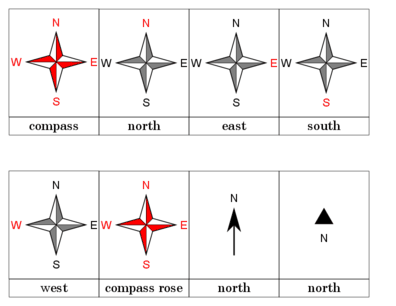
Take the compass outside. Stand in an open area and find North together. Mark it with a stick or chalk arrow. Then find South, East, and West.
Extension: Make a human compass rose — the child stands in the center while family members or classmates stand at each cardinal point. Call out directions: "Walk three steps East!" "Turn and face South!"
Connect this to the Montessori globe: "When we look at the globe, North is always at the top. Can you find where we live?"
Activity 3: Treasure Map (Ages 5–9)
Hide a small treasure (a special snack, a new book, a small toy) somewhere in the yard or house. Draw a map showing the route from a starting point to the treasure, using simple symbols:
- 🌳 = tree
- 🚪 = door
- ⭐ = treasure!
Include a simple legend (map key) so the child practices reading symbols. For older children, add a compass rose and use cardinal directions in the clues.
Activity 4: From Globe to Flat Map (Ages 6–9)
This is a classic Montessori demonstration. Peel an orange and try to flatten the peel — it tears and distorts. Explain that this is exactly the challenge mapmakers face when turning our round Earth into a flat map.
Compare a globe and a flat world map side by side. Ask: "Does Greenland really look that big? Let's check on the globe!" This builds critical thinking about map projections.
Connection to Montessori Curriculum
Map skills connect beautifully to several areas of the Montessori curriculum:
- Geography: Land and Water Forms — understanding the physical features that appear on maps
- Cultural Studies: Continent Boxes — exploring what's found in different parts of the world
- Math: Shapes and Geometry — spatial reasoning and measurement
- Science: Earthquakes — understanding how Earth's surface changes over time
Tips for Parents
Maps are everywhere — use them! Point out the mall directory, the trail map at the park, the subway map, the GPS on your phone. Each encounter reinforces the idea that maps are practical, useful tools, not just classroom exercises.
Keep a family atlas accessible on a low shelf. When you read about a place in a story, find it on the map together. When a relative travels, trace the route. Geography becomes a living subject.
🧭 Free Printouts
Download these free printables to go along with your map skills lesson:
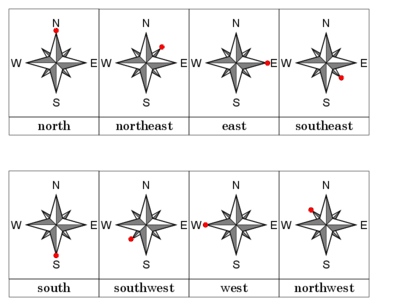
- Compass Rose Printout — Label the cardinal and intermediate directions
- Compass Directions Practice — Follow directions using a compass rose
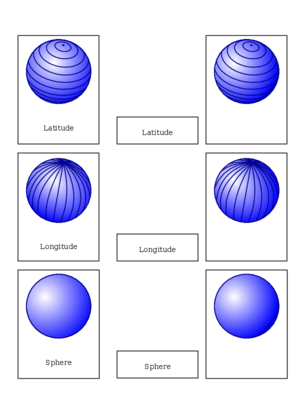
- Geography Nomenclature Cards (Set 1) — Three-part cards for geography vocabulary
- Geography Nomenclature Cards (Set 2) — More geography terms to explore
Happy exploring! 🗺️
Free Printouts
Download these free printables to extend the lesson: