Pink Tower and Counting
Published on: March 08, 2009
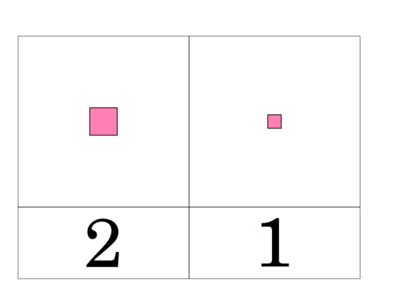
The Pink Tower is often a child's first taste of Montessori math — before it is a math lesson, it is a sensorial one. Ten pink cubes, each one a centimeter bigger than the last, let little hands discover the words small, smaller, smallest and large, larger, largest long before those words become numbers.
This activity takes that familiar tower and turns it into a gentle bridge to linear counting. The smallest cube is one. The largest is ten. Because each cube visibly grows, a child can see — not just recite — that numbers have value.
Free Printouts
We made a set of Pink Tower counting cards you can print at home. Each card shows a cube in one of the ten sizes, so your child can put them in order just like the real tower.
- Pink Tower counting cards (numbers only)
- Pink Tower cards with English number names
- Pink Tower cards with Spanish number names
- Pink Tower cards with French number names
Primary Activity
Print two copies. Cut out the cards on one copy and glue them to tag board or cardboard in order, smallest to largest — that becomes your control card. For younger children, snip the printed numerals off so the cubes do the teaching.
- Invite your child to match each individual card onto the control card.
- When that feels easy, take the control card away and let them put the cards in order on a rug or table, left to right, smallest to largest. Start with three to five cards and add more as they master the sequence.
- Once the ordering is solid, use the cards to count aloud from one to ten, one cube per count.
The Spanish and French sets work exactly the same way — a quiet, low-pressure doorway into a second language.
Always adapt the lesson to the child in front of you.
If You Don't Have a Pink Tower Yet
The real material is worth it if Pink Tower work is going to be a regular part of your shelf. Two sets we've linked to before:
- Kid Advance Montessori Pink Tower — classic ten-cube set, solid beech, good entry-level price.
- Montessori Outlet Pink Tower — premium finish, the one many classrooms use.
(These are Amazon affiliate links — if you buy through them, MontessoriMom earns a small commission at no extra cost to you.)
Other Ways to Count Concretely
You don't need the official material to practice the same thinking. Nesting measuring cups, ring-stacking towers, or a set of mixing bowls in graduated sizes all let a young child compare, order, and count real objects. The Pink Tower is beautiful, but the idea — that counting is about real, visible quantity — travels anywhere.
Related Articles
- The Pink Tower
- Pink Reading Scheme
- Counting Chain and Bead Stair
- Lesson of the Day 35: Counting Chains and the Bead Stair — Montessori Math Adventures
- Counting Games