Practical Life Activities for Toddlers
Published on: April 26, 2026
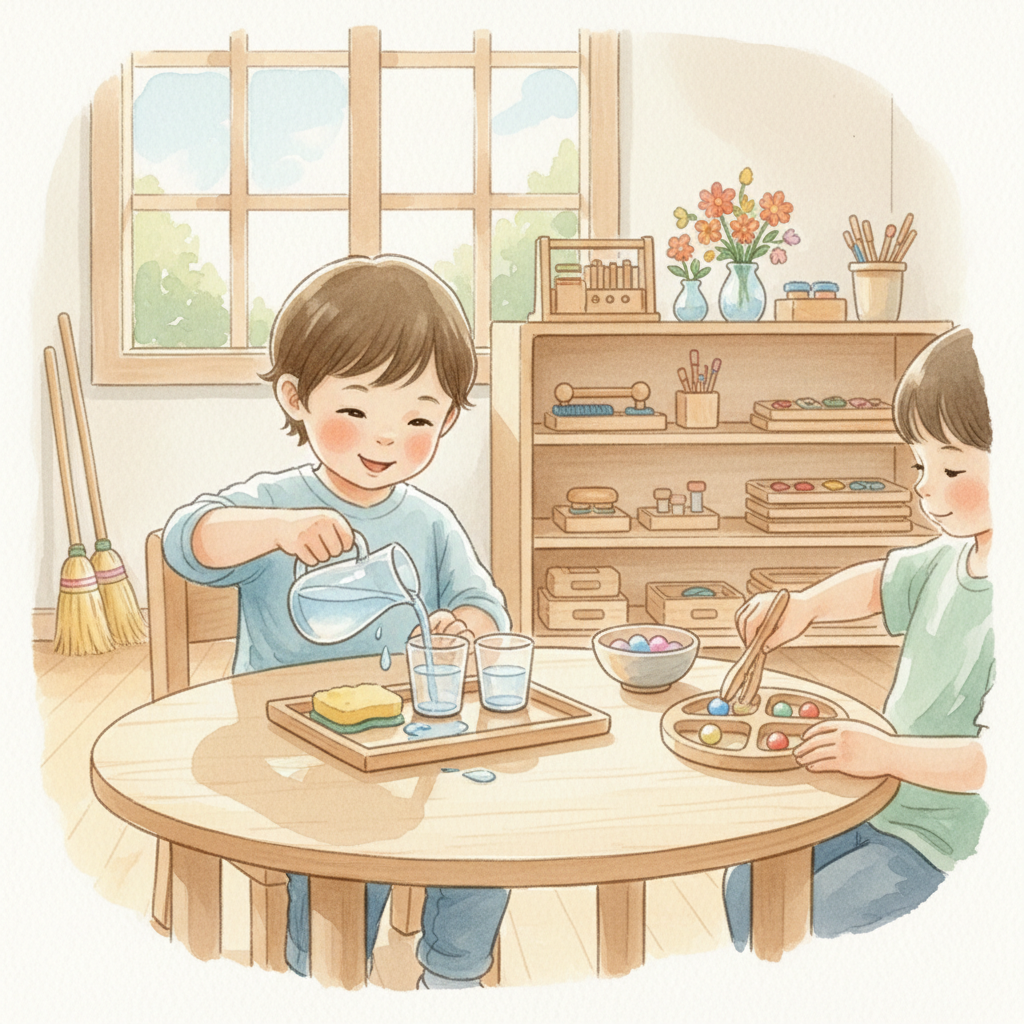
Practical Life Activities for Toddlers
Practical life is the heart of Montessori for toddlers. These everyday activities — pouring, spooning, buttoning, sweeping — build concentration, coordination, independence, and a deep sense of “I can do it myself!” Maria Montessori observed that children who master practical life skills develop an inner drive for intellectual learning that carries them through every area of the curriculum.
Recommended Materials
- Montessori Stainless Steel Pitcher for Toddlers — child-sized pouring pitcher, perfect for water transfer work
- Montessori Wooden Trays with Handles (3-Pack) — use these to set up individual practical life stations
- Montessori Wooden Lacing Beads (46 Pieces) — excellent for developing fine motor skills and hand-eye coordination
- Montessori Dressing Frames Set of 6 — community-style set with buttons, snaps, zippers, bows, lacing, and buckles
- Wooden Montessori Dressing Frame Set — classic wooden frames for practicing each fastener type
Why Practical Life Matters
Montessori described the young child as having an “absorbent mind” — soaking up everything in the environment through purposeful activity. Practical life exercises are the child’s first real work. They satisfy the toddler’s deep need for order, repetition, and mastery. When a two-year-old successfully pours water from pitcher to pitcher without spilling, that small triumph builds confidence that extends into every other area of learning.
“The children seemed to demand some conclusion of the exercises, which had already developed them intellectually in a most surprising way. They knew how to dress and undress, and to bathe themselves; they knew how to sweep the floors, dust the furniture, put the room in order.” — Maria Montessori, The Montessori Method
Getting Started: Essential Activities by Category
1. Pouring and Transferring
Start with dry materials (beans, rice) and progress to water. Use child-sized pitchers and place the work on a tray to define the workspace. The child learns to control movement, develops wrist strength for writing, and gains independence at mealtimes.
- Dry pouring: beans between two small bowls
- Wet pouring: water between two pitchers
- Spooning: transferring with a tablespoon, then a teaspoon
- Tonging: using kitchen tongs to move cotton balls or pompoms
2. Care of Self
These activities teach the child to care for their own body — the foundation of independence. Set up each activity on its own tray or basket so the child can choose it freely.
- Hand washing with a small basin and soap
- Tooth brushing practice
- Putting on and taking off shoes
- Using dressing frames — large buttons first, then snaps, zippers, and bows. Try the Montessori Practical Life Dressing Frames Set (button, zipper, buckle, snap, lace, and bow) or this wooden dressing board for toddlers.
- Folding cloths and napkins
3. Care of the Environment
Toddlers love to help! Channel that energy into real, purposeful work. Use child-sized tools whenever possible.
- Sweeping with a small broom and dustpan
- Wiping tables and spills with a sponge
- Watering plants with a small watering can
- Polishing — shoes, mirrors, or silver
- Setting the table for meals
4. Food Preparation
Cooking is practical life at its best — it combines pouring, cutting, mixing, and following a sequence. Even very young toddlers can participate with appropriate tasks. See our full article on cooking with kids for more ideas.
- Washing fruits and vegetables
- Peeling bananas and oranges
- Spreading butter or cream cheese with a dull knife
- Stirring ingredients in a bowl
- Cutting soft foods (banana, strawberry) with a crinkle cutter
5. Fine Motor and Threading
These activities prepare the hand for writing while building concentration and patience.
- Stringing large beads on a lace
- Opening and closing containers with different lids
- Using clothespins to clip items to a line
- Twisting and untwisting bottle caps
Setting Up a Practical Life Area at Home
You don’t need a classroom to offer practical life. A low shelf or table with 4–6 trays, rotated weekly, gives your toddler meaningful choices. Key principles:
- Child-sized tools: Small pitchers, brooms, sponges — real tools, not toys
- Left-to-right layout: Arrange materials on the tray from left to right to reinforce reading direction
- Complete and beautiful: Each tray has everything the child needs, arranged attractively
- Freedom to repeat: Let the child do the activity as many times as they want
- Model first: Show the activity slowly and silently before the child tries
Related Articles
- Practical Life — overview of the Montessori practical life curriculum
- Practical Life Activities — more activity ideas for the home
- Early Practical Life — hands and mouth activities for the youngest toddlers
- Toddler Scope and Sequence — full scope and sequence for toddler practical life skills
- Dressing Frames — detailed lesson on using Montessori dressing frames