Reading Ideas — Teaching Words to Non-Phonological Readers
Published on: January 13, 2010
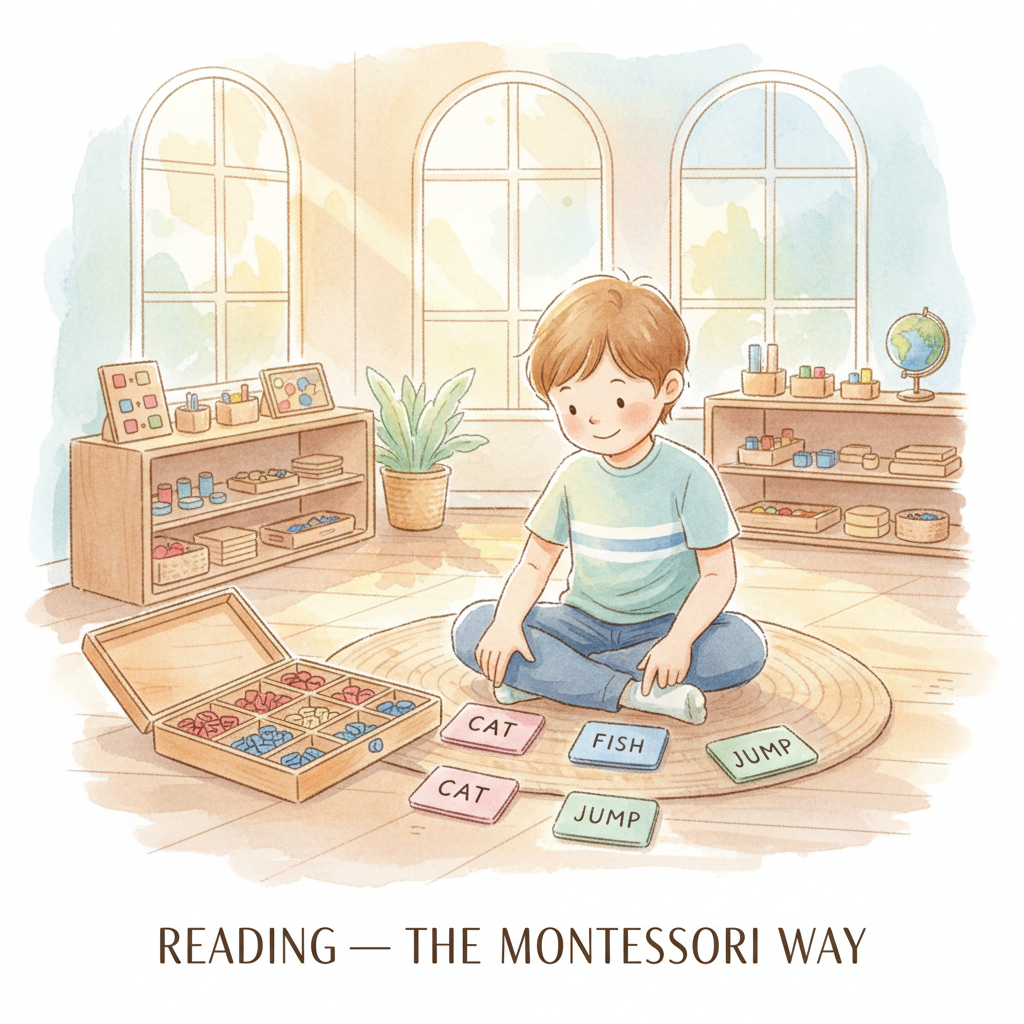
Teaching Words to a Non-Phonological Reader
Sometimes the Montessori approach to reading does not unfold the way we expect. Some children — even after they have been carefully presented with sounding out letters, building words, and reading phonetically — still struggle to read. It happens in the best of homes and classrooms; it even happened to a Montessori teacher's own child.
So what do you do when your child is not a phonological reader? You teach whole words. One of my own children couldn't make sense of how phonetic words and all their exceptions fit together until he simply memorized words. It took time, and his reading developed more slowly — but it worked. Once he had a bank of words he recognized on sight, the Montessori pieces finally clicked into place, and around age ten his reading suddenly soared.
Montessori teachers traditionally steer away from drilling high-frequency words with flash cards, but for a child who needs it, it is worth considering. Keep it light and playful: let your child choose which words he or she would like to learn, and make it a game with no pressure and no competition.
Make Word Learning a Game
Any printout of pictures with matching labels makes a wonderful matching exercise. For a greater challenge, use the words on their own with no picture prompt. Our Montessori Reading Cards and Life Cycle Reading Cards are three-part cards — picture and word together — that are perfect for this kind of matching work.
Make two to four sets of each word on small note cards and play a modified game of "Go Fish," asking for matching words instead of matching numbers. You can also build short, silly stories using only the words your child already knows — reading something they helped create is wonderfully motivating. For more confidence-building repetition, the Pink Reading Scheme and our Reading Object and Picture Boxes give your child plenty of friendly practice.
The single most important thing is to follow your child's interests. Choose words and topics they genuinely care about, and motivation comes for free. There are also lovely free interactive reading games online to mix things up.
Build Your Own Word Lists
Pair these matching games with the free printouts above, or build a custom list straight from our Montessori Word List for English.
5 Tips to Help Your Child
- Be patient, and try not to worry.
- Don't push your child to read before he or she is ready.
- Read material that is fun, exciting, and enjoyable.
- Read books a little beyond your child's reading level to grow strong comprehension.
- Share your own love of reading every day.
Happy reading!
Recommended Materials
These two inexpensive materials pair beautifully with the matching games and sight-word work above:
- Elite Montessori Wooden Movable Alphabet with Box — the classic Montessori tool for building words by sound and by sight, so a child can compose the very words they are learning to recognize.
- Coogam 520 Sight Words Flash Cards (Dolch) — a ready-made set of high-frequency words for the playful, low-pressure matching games described above.
Learning is Exciting!